
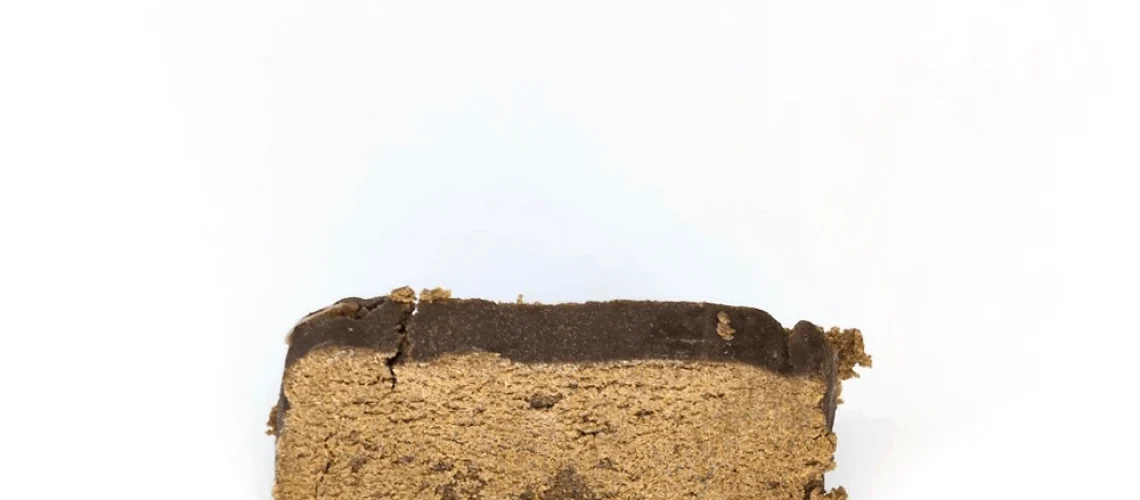


A better way to compare hash strains
Comparing hash strains becomes easier when you don't evaluate everything at once. Don't start with twenty product names, but with a few fixed criteria: color, texture, intensity, quantity, and price.
Those who want to proceed immediately can go to compare hash varieties. The explanation below shows how to keep track of the differences.
Start with texture
Texture is often the most practical starting point when it comes to hash. Softer, more crumbly, more compact, or oilier are not minor details. They influence how the hash is judged and what you expect from it.
Color comes next. A light option can be attractive, but says too little without structural information. A dark option can be just as suitable when the description is clear.
Use price later
Price comparison works better after the style has been chosen. Otherwise, the cheapest or most striking option wins too quickly. First determine what you are looking for, and then see what price makes sense.
With the wide range available, you can compare suitable hash options without immediately pinning down to one name.
A practical example
Two types of hash can have the same price but feel completely different. One is described as light and soft, the other as darker and more potent. Anyone looking only at price misses that difference entirely. As points of comparison, you can look at the descriptions of Gush Mints Plasma, Bubblicious , and Strawnana regarding texture and presentation.
A good comparison therefore requires not more text, but a better order. First style, then quantity, then price.
Building an equation that really helps
A good hash comparison acts as a filter. First, options that don't fit in terms of texture are eliminated. Then, you look at color, quantity, and price. This order keeps the selection manageable.
It is tempting to go straight for the most striking name. However, a quieter approach works better. A less spectacular name with a clear description can ultimately be the stronger choice.
Those wishing to explore multiple styles are better off comparing on a small scale. A large order makes most sense when a preference is already known. This keeps learning affordable and manageable.
Color often receives too much attention. It is visible, but says less than texture and description. Use color as a tool, not as proof.
Price should round off the choice. When the style is already right, price can determine which option is most attractive. If the style is not right, a discount does little to compensate.
Comparing hash is better when each question is answered separately. Then a calmer decision naturally emerges.
Comparing hash strains quickly becomes confusing when color, origin style, potency, and price are assessed simultaneously. A better approach is to use one criterion at a time and only then make the final decision.
Start with texture, for example. Do you want something soft, compact, crumbly, or perhaps lighter in color? Then you can look at style and intensity. That way, the comparison becomes calmer and less dependent on striking names.
Price deserves a later place in the consideration. A low price can be attractive, but says little without an explanation of form and quantity. A higher price can be logical when the information is clearer or the choice is more specific.
Stock levels can also influence the decision. When a variety is running low, choosing quickly feels tempting. However, a similar option with better-matching characteristics sometimes remains wiser.
A good comparison ends with less doubt. Not because every option is perfect, but because it becomes clear which hash best matches what the buyer is looking for at that moment.
When comparing, also use exclusion. If soft texture is important, more compact choices are eliminated more quickly. If power is more important, lighter options become less logical. By eliminating options, the selection is narrowed down without skipping any information.
A second approach is to look at repetition. If you want to be able to reorder, a recognizable name helps. If you prefer variety, a different direction might be more interesting. That changes how you weigh the product details.
Comparing is therefore not ticking off a list, but a way to sharpen one's own preferences.
A good comparison does not end with more options, but with less doubt. Therefore, consciously eliminate everything that does not align with your desired texture, intensity, or quantity.
This way, the final choice remains clear and the selection does not feel unnecessarily overwhelming.
That simplicity makes comparing more practical and helps to complete with more confidence.
Language also helps when comparing hash. Words describing soft, compact, light, or potent provide better signals than generic sales terms. Take those clues into account before looking at price or stock.
Anyone who compares in this way notices more quickly which differences are truly important. This makes the final choice less dependent on chance.
Frequently asked comparison questions
What is the first criterion?
Texture often provides the most practical information.
Is price unimportant?
No, but price should come later in the comparison.
Do I always have to order multiple types?
Not necessary. Compare on paper first and then choose consciously.
Choose more calmly by comparing fewer things at the same time
Comparing hash works better when each characteristic is examined separately. Choose the option that is clear enough and, if necessary, check the available BestBud choices for more available products.
Comparing hash requires discipline. Without order, the most striking name or the lowest price often wins, even though it does not always fit best.
Texture is usually the most useful first filter. After that, color can help to further refine the style.
A concretely described product is often easier to choose than a product with big words. This is true even when the name sounds less exciting.
Trying multiple types can be educational, but only when the quantities remain manageable.
The best comparison does not end with the most options, but with the clearest reason to choose one option.